
Get Free Ebook Traveller in Space: Gender, Identity and Tibetan Buddhism
Checking out will not make you always imaging and also dreaming concerning something. It needs to be the fashion that will certainly order you to feel so wise and also clever to undertake this life. Also analysis could be dull, it will certainly depend upon guide kind. You could select Traveller In Space: Gender, Identity And Tibetan Buddhism that will not make you really feel bored. Yeah, this is not kin of entertaining book or spoof publication. This is a book in which each word will provide you deep meaning, yet very easy and also simple said.
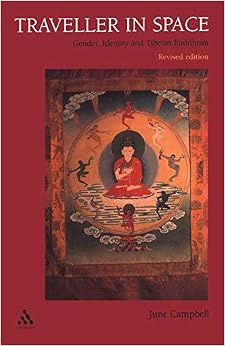
Traveller in Space: Gender, Identity and Tibetan Buddhism

Get Free Ebook Traveller in Space: Gender, Identity and Tibetan Buddhism
Currently, please welcome thee newest book to supply that can be your choice to read. Currently, we have that book entitle Traveller In Space: Gender, Identity And Tibetan Buddhism This is just what makes many people really feel desired to take the lists just for getting this publication. When many people are attempting to get this publication by taking some listings, we are here to ease your means. Are you one of those people that are much admired of this publication? Allow's open your opportunity below.
But now, by doing this could not should take place. You could move forward in far better life with alternative types of resources. Schedule as a fantastic source can be approved to make use of. Publication is a manner to bring as well as check out when you have the time to get it. Even you do not such as checking out a lot; it will really help you to recognize few of the new expertise. And below, Traveller In Space: Gender, Identity And Tibetan Buddhism is supplied ahead ahead along your ways.
Are you really a fan of this Traveller In Space: Gender, Identity And Tibetan Buddhism If that's so, why don't you take this publication currently? Be the initial individual who like and lead this publication Traveller In Space: Gender, Identity And Tibetan Buddhism, so you can get the factor and also messages from this publication. Don't bother to be perplexed where to obtain it. As the other, we discuss the connect to check out and download the soft documents ebook Traveller In Space: Gender, Identity And Tibetan Buddhism So, you could not bring the published book Traveller In Space: Gender, Identity And Tibetan Buddhism almost everywhere.
Interested in this book is must. You could be other people that require the information as well as information regarding the topic that have been written in this publication. The Traveller In Space: Gender, Identity And Tibetan Buddhism problem about the fascinating topic related to the condition today. When you have decided to buy this publication, you can go to the web link right here. It will directly worry you to acquire guide as yours. And also the soft file is what you could offer to you. Allow's get guide and also review it now.
About the Author
...
Read more
Product details
Paperback: 256 pages
Publisher: Continuum; Revised edition (June 18, 2002)
Language: English
ISBN-10: 0826457193
ISBN-13: 978-0826457196
Product Dimensions:
5.5 x 0.5 x 8.5 inches
Shipping Weight: 13.9 ounces (View shipping rates and policies)
Average Customer Review:
3.8 out of 5 stars
13 customer reviews
Amazon Best Sellers Rank:
#861,262 in Books (See Top 100 in Books)
Tibetan cultural chauvinism among lamas and abuse of women seekersAnyone who has followed the recent histories of Zen and Tibetan Buddhist teachers with western devotees knows that, too often, these same teachers have been criticized for both authoritarian and sexual indiscretions. It is easy to play the cynic who believes that these ostensibly celibate or married men--the teachers are almost always monks--find it hard to resist “sexually liberal,†white, westerners who dote over them. And it is easy to degrade devotees who submit “totally†to such gurus as no more than naive seekers who should have known better. In Traveller In Space, June Campbell delivers us beyond superficial cynicism into a scholarly study of the unusual patriarchal system of Tibetan Tantra and its relevance to female subjectivity.Although Campbell speaks from extensive personal experience--she was a consort of an important Tibetan lama (priest-monk) for several years and an accomplished translator of Tibetan texts--Traveller is not another “ex-member†exposé for lay readers. Campbell lives in Scotland where she teaches Religious Studies. Hers is an important study that utilizes sophisticated psychoanalytic, religious, and cultural theory. She explains and criticizes how the female role, the dakini, in Tibetan Tantra (Vajrayana) has diminished the individual female integrity to comply with a male-dominated, male-defined tradition. Campbell invokes feminist scholarship, especially that of Luce Irigay, as well as religion and mythology scholars, Mircea Eliade, Joseph Campbell (no relation to the author), and Agehananda Bharati among them, to reinforce her perspectives.In certain terms, Campbell points out the vulnerabilities of Tibetan Tantra to western influence. Tibetan dakinis have been acculturated to accept their roles as unequal if revered “objects†useful to lamas in their sexual rituals. The latter, usually secret, are said to provide powerful opportunities for the lama to attain “enlightenment.†Western ethics (conditioned by a long history of Judeo-Christian influence) and feminist philosophy conflict with this secret patriarchal system. Western women have long complained about sexual exploitation by certain gurus who invoke an “enlightened†status, one that “entitles†them to have sexual contact with devotees. Campbell provides a scholarly and psychoanalytic basis for their complaints as well as a new standard for women within the Tibetan tradition. She admits that if this new standard, one that accepts women as self-determining “subjects†in their own spiritual destiny, were incorporated, Tibetan Tantra would either revolutionize or disappear.More than a cross-cultural critique, Traveller In Space is a good primer on lamaism and Tantric religious history with its roots in Indian philosophy. Campbell analyses how separation from the mother at a young age has certain emotional effects on “reincarnated†lamas and their ensuing needs for “nurture†from consorts. The title is a translation of the Sanskrit word dakini (Tibetan khandro) that means “sky-goer.†The implication is that the submissive dakini is unattached to any thing and functions as an empty “space†to afford the partner-lama an experience of “enlightenment,†but, in tradition, this does not work in reverse. Campbell systematically discusses and deconstructs such male-generated notions as untenable and “illogical†within and “outwith†the system if Tibetan Tantra is to incorporate status integrity for women. She also points out how lamas manipulate their consorts, or dakinis, by suggesting if they reveal the affair or rebel, the dakini will suffer “madness, trouble, or even death.â€The fact that this manipulative behavior is somehow sanctioned by a centuries-long tradition, largely unchallenged by the females within Tibetan culture, demonstrates how completely the “feminine†has been politically framed by both male-generated symbology and signature, according to Campbell. The effects of Campbell’s study may be difficult to predict, but the need for it in light of the continued attraction of western seekers, particularly women, for exotic “enlightened†teachers is inestimable.
I have been aware for some time that Buddhism has not been completely egalitarian about it approaches males and females on the path. In some Buddhist countries, laywomen are not allowed the same initiations as their male counterparts and nuns who are senior to new male monks must still defer to them as authorities over their lives. I do not think this was the original inspiration of the Buddha, but when Buddhism spread and got integrated with other religions, like the indigenous Shamanism of Tibet (Bonn), it sometimes inherited the anti-female attitudes of the culture. There is a passage in the Theravadin canon where the Buddha declares that if men and women (who are stated as being equal in number in every class of Buddhist seeker) were not both part of his religion that it was be deficient. This is different than a passage I found in one Tibetan Buddhist book by a Lama that said that women could not become Pretyakabuddhists (solitary liberators) inspite of the fact that Tara appears to have done this just to prove this idea wrong as well as her emanation/incarnation Machig Labron. The book by June Campbell comes from an awareness of some of these imbalances and goes into the Lama system which takes tulkus away from their mothers to be raised in an all male celibate society and what impact this could have on how women are seen and treated. She goes into the idea that many lamas have secret consorts while being outwardly and socially "celibate", something that she testifies to having had personal experience with. A friend of mine had witnessed her being disturbed during the time in question and was keeping this to herself. She is discrete and does not name names in her book. I will honor her silence and not name his name either in this review. What I find interesting is that she proposes that the original gender of Avalochiteshvara was female and was actually called the Lotus Goddess. This makes sense in terms of the construct of the mantra "Om Mani Padme Hum", since Usually the name of diety is framed by "om" on one side and the Tantric energy family on the other side ("hum" for the Amogasiddhi family and the element of air) as in "Om Vajrasattva Om" or "Om Amitabah Hreeh". Since Padme means "lotus" this may have been the original form. Regards of whether or not it is correct, it is an interesting proposal and may deserve some further investigation. Ultimately, I feel the gender of the diety is not crucial to the call for help via the mantra, but one may wonder if and why the gender changed. I like the passages that indicate a kind of "feminist psychoanalysis" which I feel is part of a larger movement of attempting to synthesize Buddhist meditation with Western psychotherapy. I find this direction interesting and worthwhile, it seems to have personally helped the author to get clear on her experience and to share what she learned with us. I love Tibetan Buddhism as a path of practice and am devoted to the kind of meditation it encourages, yet I have gone beyond needing my religion to be perfect and feel that it is healthy that a religion critique itself.
I bought this book to learn for myself if this woman had sexual encounters with the esteemed teacher, Kalu Rinpoche. She doesn't write much about it, but she does say she was his consort for a time, and from what I can tell it is true. This book makes it clear that there is so much secrecy amongst those in power in this tradition, and since Tibetan society condoned treating women as second class citizens, her sexual relationship with Kalu Rinpoche probably happened.Campbell makes it clear how easy it is to hide such things when someone is in power. It's always easy to appear one way in public, yet do things in private if one beleives one is above getting caught, and above spiritual reproach. (Krishnamurti, for instance, had a 20 year affair with the wife of his right-hand man (see Radha Rajagopal's book: Lives in the Shadow with J. Krishnamurti) and in public Krishnamurti pretended to believe sexual interests were beneath him).Campbell also tells of ancient texts giving esoteric instructions to monks regarding how to treat their girls, some under 10 years old. Interesting.I'm not much into feminism, and this book is takes an academic approach to Gender Identity in Tibetan Buddhism, which is in its title so should be no surprise to readers.
I honor and love the way this book overlaps iconography,sociology, the history of ideas and religion, the personal story of the writer, and a desire for liberation of all beings. I think she's really onto an important thread of Tibetan Buddhism when she points out the symbols of partriarchy and control within it. Ideas intended to liberate must truly do so. I hope that Buddhists and Buddhist scholars read this. I hope that all ideologies pretending to liberate and fight for liberty learn from this.
Traveller in Space: Gender, Identity and Tibetan Buddhism PDF
Traveller in Space: Gender, Identity and Tibetan Buddhism EPub
Traveller in Space: Gender, Identity and Tibetan Buddhism Doc
Traveller in Space: Gender, Identity and Tibetan Buddhism iBooks
Traveller in Space: Gender, Identity and Tibetan Buddhism rtf
Traveller in Space: Gender, Identity and Tibetan Buddhism Mobipocket
Traveller in Space: Gender, Identity and Tibetan Buddhism Kindle